

7 Ways Parents Are Taking Back Control Of Education
As the uncertainty continues, many families struggle with balancing school, work, and home. We understand and are here to help with the most flexible programs designed specifically for your child. Read below about the 7 ways that parents are taking back control of their child’s education.

1. Not waiting for things to get better.
As public schools determine whether or not to return to in-person learning, students are falling further behind. In addition, once they return to school, will they be forced back into remote learning, should the risk score return to above 7? New protocols related to COVID testing are being added as well that will add stress to the student’s day even before the school day starts. With new variants of the virus, we are unsure what the future holds and some predict the spread of the virus will get worse before it gets better.
As one parent tells us, “I thought things were going to get better.”

2. Getting help with school to lift this heavy burden.
It is not your job as a parent to also be your child’s teacher. It is difficult right now to balance home, school, and work. With the structure of school and work missing, many children are finding it hard to focus on schoolwork, and parents are struggling to fit everything into a day. Add to that the burden of being experts in English, Math, and Science, and it is understandably overwhelming.
“I should have called months ago” is something we hear from many of our parents.

3. Focusing on having more confident kids.
Uncertainty about the virus, learning new routines for health and safety, and having family members affected by the virus, all create less confidence in our children. When you add in struggling with school, a child’s self-esteem can be impacted. By understanding your child’s strengths and weaknesses, we can develop a plan that helps them succeed, not only in school but in the other areas of their life.
“I just want someone to build my child’s confidence.”
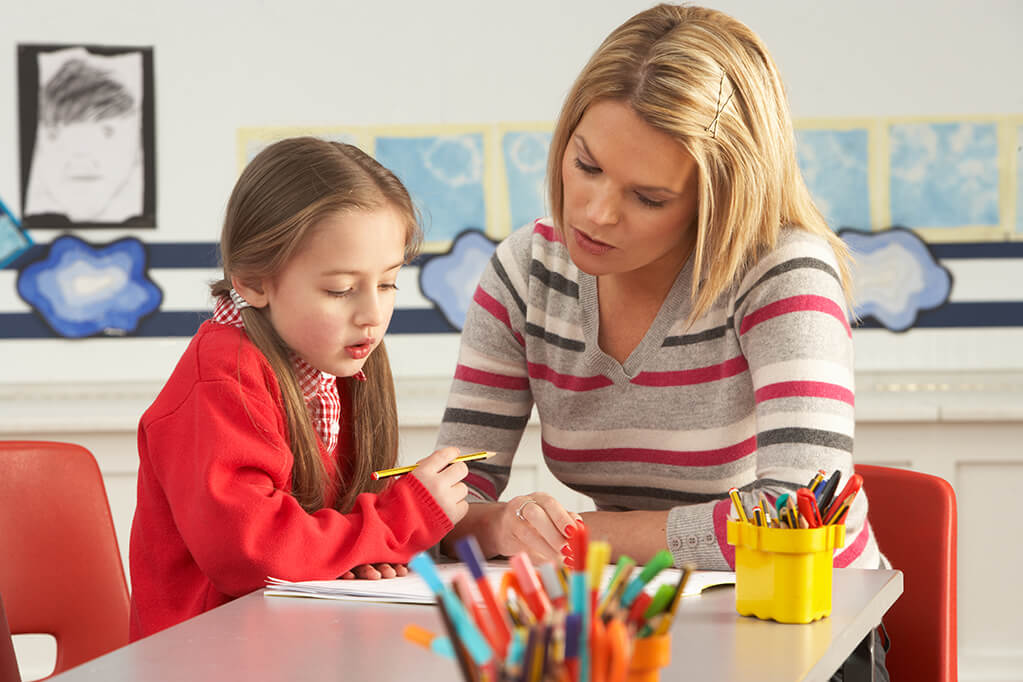
4. Getting back to one-on-one learning.
Virtual learning leaves a lot to be desired. Teachers and students are distracted by technology issues, attention spans are short, and ensuring that all the students are engaged is tough. At Gateway Academy, we provide one-on-one learning, focused on each individual child. Our program is designed to identify the strengths and weaknesses of each student and formulate a learning plan specifically for them.
“My child wants to come to tutoring, it makes him feel smart.”

5. Focusing on harmony in your home.
Children express frustration in a variety of ways and when school is frustrating, conflicts can arise at home that seem unrelated. When parents are frustrated, they may not recognize why their child is misbehaving. Having an individualized plan tailored to your student’s needs can relieve much of this frustration and reduce conflict at home. Routines are important for children and help provide them with a productive learning environment, which makes everyone happier.
“My child’s personality changed for the better.”

6. Being proactive now puts your kids ahead instead of behind.
We won’t know the full impact of virtual schooling on our children’s learning until further down the line. Don’t wait until it’s more difficult to catch up, or an approaching application deadline. Even though many of the standardized tests are optional for admission to college, they are still being utilized for merit-based financial aid, scholarships, placement, special programs, and fellowships. It is also clear that while not being required, a good score unquestionably makes a difference.
“All the kids are behind right now. I don’t want my child to stay behind”

7. Recognizing that top students aren’t challenged enough right now.
Many times the students that need the most help are the ones who receive the most attention. If you have a top-performing student, they may be left to fend for themselves. We want to make sure these students are not only challenged but learn at a pace that is comfortable for them.
“My child wants to go to school.”